Hormuz, Malacca, Suez, and the governance gap between them. This isn't a logistics problem.
About a year ago, I brought up the Strait of Hormuz in a conversation with a friend. He laughed and told me I was being esoteric. We don't laugh about it anymore. That moment has stayed with me, not because I was right, but because of how fast "esoteric" becomes "obvious." Supply chains are full of those signals right now. The question I keep coming back to in boardrooms and C-suite conversations is not whether your company has a contingency plan. It's whether your organization is built to continuously find the next chokepoint before it finds you.
 Alex Kruzel
CEO & Founder, Telesto
April 2026
Alex Kruzel
CEO & Founder, Telesto
April 2026
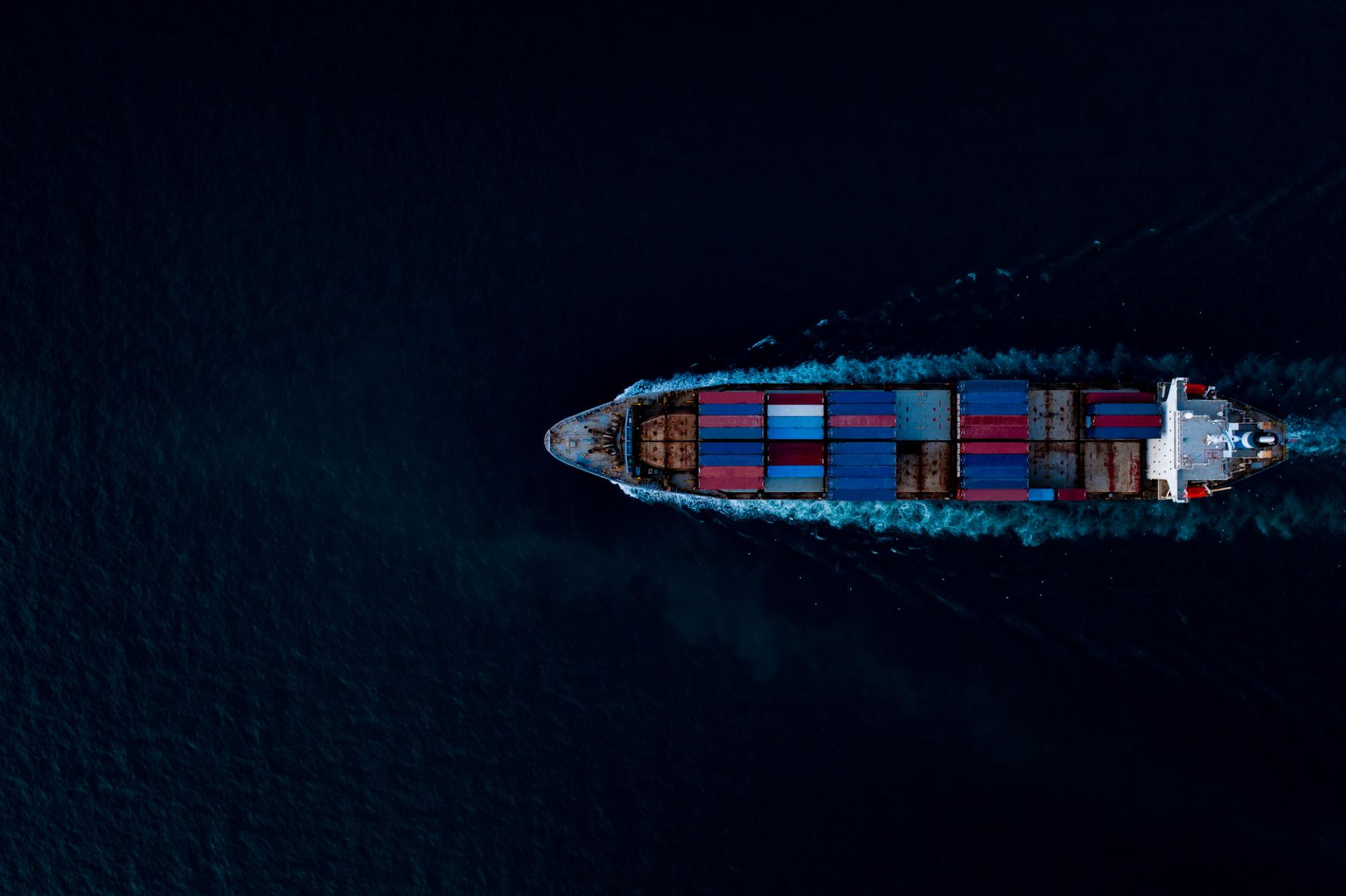
"The companies I worry about most are not the ones ignoring global shipping risk. They're the ones who think they've solved it. Because they diversified a supplier or added a week of buffer inventory. The geopolitical risk environment has permanently shifted. The chokepoint map is not static. And most organizations are structured to respond to the last disruption, not the next one."
, Alex Kruzel, CEO & Founder, TelestoWhy the C-suite and board are asking the wrong question
Most leadership conversations about global shipping start with the wrong frame. They begin with freight rates, transit times, and supplier geography, operational variables that belong in the hands of procurement and logistics teams. What belongs in the boardroom is a different and harder question: is our organization designed to continuously monitor and respond to a geopolitical risk environment that is structurally more volatile than it was five years ago?
The Suez disruption, the Panama Canal drought constraints, and the Hormuz tail risk are not isolated events. They are signals of a new operating reality (one in which multiple major chokepoints are under simultaneous) compounding stress for the first time in modern commercial history. The companies navigating this well are not simply more diversified. They have built a continuous intelligence capability: a systematic way of scanning for the next disruption before it lands on the front page.
What I consistently see when working with management teams and boards on this is a structural gap. The monitoring capability exists in pockets. A sharp procurement leader here, a risk consultant engagement there. What is rare is a company that has institutionalized the discipline of proactive chokepoint intelligence as a standing governance function. That gap is where the most significant strategic and financial exposure lives.
The $11.0B problem that is not in most risk registers. A US/Israel conflict with Iran triggering Gulf destabilization and Hormuz closure represents the highest daily economic impact of any geopolitical scenario currently modelled. At 25x the next highest flashpoint (for any company with Asian sourcing, energy-intensive operations, or Gulf corridor exposure) this is not a tail risk to footnote (It is a scenario that requires a documented) tested response protocol at the board level.
A system built on chokepoints, and those chokepoints are under simultaneous stress
Global maritime trade routes its most critical flows through a handful of narrow passages. The defining feature of the current moment is not any single disruption. It is the convergence of several, each driven by a different mechanism: military conflict, climate stress, and great-power geopolitics.
I have been raising the Taiwan Strait in board and C-suite conversations with increasing urgency. The Strait of Malacca (Through which roughly 40% of global trade by value passes) is the commercial artery that a Taiwan conflict scenario would sever or severely constrict. Unlike the Red Sea disruption, which affected primarily Asia-to-Europe flows, a Malacca/Taiwan disruption would affect global semiconductor supply, consumer electronics, energy imports to Japan and South Korea, and a significant portion of US transpacific trade simultaneously.
The question I am asking leadership teams now: if the Strait of Malacca were constrained for 90 days, which of your product lines would be first to fail, and does your board know the answer?
Geopolitical flashpoint daily economic impact, ranked
| Risk scenario | Daily impact* | Scale |
|---|---|---|
| US/Israel conflict with Iran. Gulf destabilization & Hormuz closure | $11.0B | |
| Ukraine/Russia war escalation | $0.43B | |
| China economic slowdown | $0.27B | |
| India energy shock exposure | $0.12B | |
| Eurozone stagflation | $0.08B |
*All values estimated as of March 2026. Source: Bloomberg Economics, World Bank, Reuters, IMF, OECD.
Freight rate volatility has permanently entered the P&L conversation
Shipping costs have migrated from a fixed-rate operational line to a volatile, material P&L variable. CEOs and CFOs who are not tracking these as financial exposures alongside currency and commodity risk are operating with an incomplete picture.
The exposure profile differs materially by sector
Maritime disruption does not affect all companies equally. Below is a sector-by-sector assessment for the industries where I work most closely with leadership teams.
The exposure: Manufacturers, precision parts businesses, and industrial services companies carry the highest absolute freight exposure of any sector. A Hormuz closure adds a second shock vector: energy-intensive manufacturers face immediate input cost inflation compressing margins from both cost-of-goods and cost-of-production simultaneously.
What I see in the boardroom: The critical vulnerability sits in Tier-2 and Tier-3, sub-suppliers that route components through a single corridor, often without the buying company's knowledge.
The unresolved question: Nearshoring is the consensus response. But if the next disruption is Taiwan Strait and Malacca, a Mexico-based manufacturing footprint does not protect semiconductor-dependent production lines.
The exposure: Healthcare supply chains are among the most chokepoint-dependent in the economy. APIs, medical-grade plastics, and imaging components route through Malacca and historically Suez. A Hormuz closure compounds this through energy price shocks raising both production and cold-chain logistics costs.
What I see in the boardroom: A mid-market specialty distributor with $150M in revenue and 15% freight intensity can see $3-5M in EBITDA erosion in an extended disruption scenario, and most boards have not modelled that number.
The unresolved question: Near-shoring API sourcing is gaining momentum, but the regulatory pathway is long and expensive. How to build a supply strategy robust to a five-year horizon of regulatory uncertainty on both ends.
The exposure: Professional services firms face a fundamentally different profile. Direct freight costs are minimal. The value-at-stake runs through client demand for maritime risk advisory and reputational/sanctions exposure from third-party logistics using shadow fleet carriers.
What I see in the boardroom: Buyers are increasingly selecting advisors based on whether they can speak credibly to Hormuz scenario planning, CSRD compliance mapping, and shadow fleet screening.
The unresolved question: How much of supply chain intelligence expertise is defensible proprietary capability, and how much will be commoditized by AI-enabled tools within 24-36 months?
The exposure: Energy companies are simultaneously a direct participant in chokepoint risk and the transmission mechanism through which that risk reaches every other industry. Hormuz is the defining scenario: ~20% of global oil and significant LNG through a 33km passage.
What I see in the boardroom: Companies accelerating energy transition may be reducing Hormuz exposure while increasing dependence on critical mineral supply chains that route through Malacca. Solving one chokepoint dependency can quietly create another.
The unresolved question: Whether the global strategic petroleum reserve infrastructure is adequate to buffer a Hormuz closure of more than 30-45 days. The geopolitical dynamics around reserve releases have changed materially since 2022.
The exposure: Consumer companies face highly visible, directly consumer-facing maritime risk compressed into narrow seasonal windows. A six-week lead time extension that would be manageable for an industrial business can be catastrophic for a retailer that needs holiday inventory in distribution centers by September.
What I see in the boardroom: Building buffer inventory to hedge against lead time risk requires capital, and the cost of that capital at current interest rates has changed the economics significantly.
The unresolved question: Whether the fast-fashion model, built on short-cycle Asian manufacturing and reliable transit times, requires rethinking at the business model level, not just the logistics strategy.
The exposure: ~90% of advanced semiconductor production is concentrated in Taiwan (Substrate materials) packaging components, and finished chips flow through the Strait of Malacca. A Taiwan Strait escalation would not merely disrupt technology supply chains. It would suspend them.
What I see in the boardroom: The practical question is not "will there be a Taiwan conflict?" but "which of our product lines go dark if Malacca is constrained for 60 days, and what is our response protocol?"
The unresolved question: CHIPS Act timelines mean the risk window is long, and new fab economics outside Taiwan remain uncertain. Legislative intent is not a near-term supply chain hedge.
The exposure: Aerospace and defense companies are simultaneously beneficiaries of elevated geopolitical risk through increased defense budgets and victims of it through critical material disruption. Dependence on titanium (Russia), rare earths (China), and specialized electronics (Taiwan) concentrates risk in exactly the most volatile regions.
What I see in the boardroom: Many defense primes have good visibility to direct suppliers but limited visibility to Tier-3/4 specialty material sources. A Malacca disruption affecting rare earth flows would hit sub-suppliers first.
The unresolved question: Whether the supply chain architecture underlying the defense industrial base is adequate to support a sustained production surge scenario. Most assessments suggest it is not.
The exposure: Food and agriculture face maritime disruption with urgency other sectors do not: perishability. A six-week rerouting delay is simply not available as an option for temperature-sensitive products. Fertilizer supply chains, already disrupted by the Ukraine conflict, route through the same chokepoints under pressure.
What I see in the boardroom: Companies demonstrating supply chain resilience and provenance transparency are commanding pricing power with buyers who now treat reliability as a procurement criterion.
The unresolved question: The intersection of climate-driven chokepoint stress (Panama drought) and geopolitical stress (Hormuz, Suez, Taiwan) has never been modelled in combination at scale. The food system optimized for stability that no longer exists.
The questions I cannot yet resolve, and that should be on every board's agenda
The most valuable thing an advisor can offer in a moment of genuine complexity is not a clean answer. It is an honest articulation of the questions that do not yet have one.
Most leadership teams can describe their resilience strategy with fluency (what I test is whether the organization can actually execute that strategy under simultaneous) compounding disruptions. Resilience that has not been stress-tested is a narrative, not a capability. The board's job is to insist on the difference.
The Suez and Panama situations emerged from signals visible well before they became crises (Does your organization have a systematic) continuous process for identifying the next chokepoint before it surfaces in Bloomberg? Or does your intelligence arrive when the problem is already too expensive to solve cheaply?
A predictive model trained on historical chokepoint data identifies the last disruption well. The chokepoints that matter most. The ones that are "esoteric" until they are "obvious", fall outside the historical training set. The human judgment required to train AI to think differently about risk is a strategic capability, not a technical one.
Board reporting on supply chain risk tends to reflect what management has mapped. Tier-1 suppliers and named corridors. The genuine exposure in Tier-2 and Tier-3 is rarely visible at the board level until it crystallizes into a crisis. When did you last receive a supply chain risk briefing that surprised you? If the answer is never, the briefing is probably not comprehensive enough.
I am seeing companies execute nearshoring strategies that reduce Suez and Panama exposure while quietly increasing dependence on Taiwan Strait and Malacca flows. The geography of the solution must match the geography of the next risk. If the next major disruption is Taiwan and Malacca, a Mexico-based manufacturing footprint is not the answer to the question that matters.
Six things leadership teams and boards should be doing differently
These are not crisis responses. They are structural changes to how organizations govern in a world where geopolitical risk is a permanent operating condition.
- Designing agentic decision frameworks that give leadership teams the structure to act under uncertainty without waiting for perfect information
- Mapping reversibility profiles across supply chain commitments, identifying where optionality should be preserved and where decisive commitment creates value
- Building Tier-2/3 supplier intelligence and scenario-specific EBITDA quantification that gives boards the inputs to make genuinely informed decisions
- Advising on governance architecture that treats geopolitical risk as a continuous decision environment, not a periodic review item
Alex Kruzel is CEO and Founder of Telesto, which provides growth services and investment intelligence to the PE ecosystem across industrials, healthcare, and professional services throughout the deal lifecycle. Alex advises boards, C-suite executives, and investors on geopolitical risk, supply chain resilience, and strategic positioning in volatile markets. She is the author of The Courage to Continue. To follow her work, connect on LinkedIn. To discuss supply chain governance for your organization, reach out directly.
Sources: UNCTAD, Clarksons, Czarnikow Group, LSEG Shipping, Panama Canal Authority, Council on Foreign Relations, IMF Port Watch, Bloomberg Economics, World Bank, Reuters, OECD, US FDA, US ASPE, IMO, IEA, FAO, TSMC disclosures, EU CSRD/EUDR regulatory guidance, company disclosures. Data current as of April 2026.