A geography you didn't price
American companies have committed over $2 trillion to reshoring manufacturing. Most boards approved those commitments without a climate risk line item in the analysis. That gap (Between the speed of capital deployment and the pace of climate due diligence) is where the next generation of impaired assets, insurance crises, and fiduciary exposure will emerge.
 Alex Kruzel
December 2025
Alex Kruzel
December 2025
Sources: White House manufacturing announcements; NOAA Billion-Dollar Disasters database; Insurance Information Institute; Munich Re NatCatSERVICE 2024.
Interactive TCFD climate risk map
26 major onshoring commitments mapped against state-level physical climate hazard scores. Toggle hazard layers to see how risk concentrates differently by threat type. Hover any state or company marker for details.
TCFD-aligned physical climate risk scores derived from NOAA, FEMA National Risk Index, EPA climate indicators, and First Street Foundation data. State-level composite reflects weighted acute + chronic hazard exposure.
When a board approves a $500M manufacturing facility in Phoenix or a $1.7B pharmaceutical campus in North Carolina, the discussion typically turns on labor markets, state incentive packages, proximity to customers, and logistics infrastructure (what rarely surfaces, and almost never with quantitative rigor) is the physical climate risk profile of the chosen site over the 15 to 25-year life of that asset.
This is not an environmental argument. It is a capital allocation argument. The question boards should be asking is not whether their company has a climate strategy, but whether the sites they are approving capital for will be insurable, operable, and financeable across the full investment horizon. In a growing number of cases, particularly across Texas, Arizona, Nevada, Georgia, and the Gulf Coast. The honest answer is: we don't know, and we haven't modeled it.
"The United States is not a monolithic destination. It is a geography of radically different climate risk profiles, and companies choosing between sites are, whether they know it or not, also choosing between futures."
What has changed in the past 18 months is not the underlying physics. It is the financial architecture around it. Insurers are repricing or withdrawing from high-risk regions at a pace that now outstrips corporate planning cycles. Credit rating agencies are beginning to embed climate hazard exposure into assessments of industrial issuers. Lenders are asking questions at origination that they were not asking three years ago (And the acquirers who will eventually purchase these assets, whether through M&A or PE exit) are building physical climate risk into their underwriting models.
None of this requires companies to take a political position on climate change. It requires them to take a financial position on asset risk. Those are different conversations, and conflating them has caused many management teams to defer the latter by treating it as an extension of the former. That deferral is now carrying a cost.
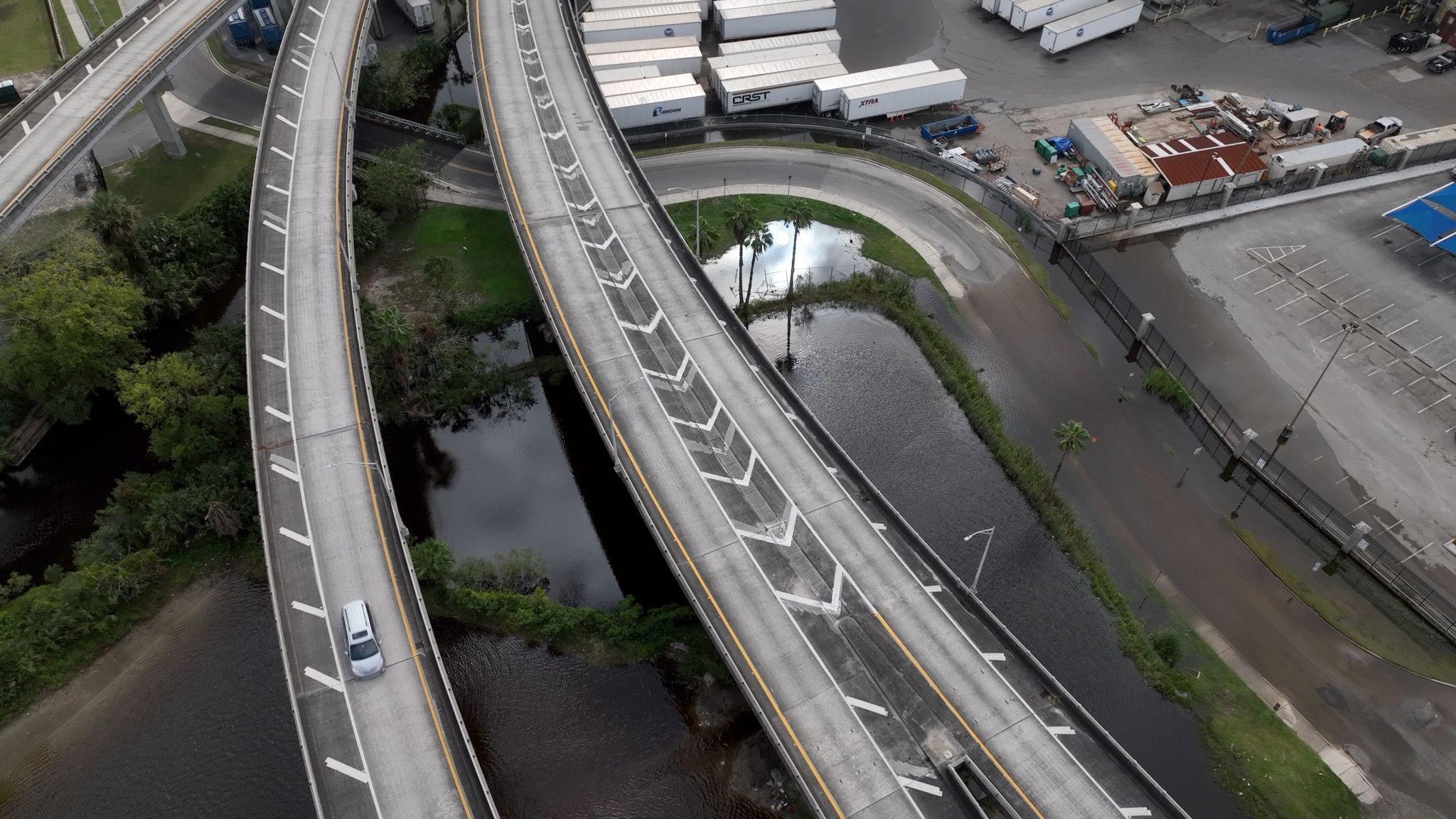
Georgia, home to Hyundai's $21B EV complex, GE Appliances expansions, and a growing industrial corridor, faces a different but equally real profile: intensifying tropical storm activity, compounding heat and humidity, and increasing pressure on water resources across the southeastern corridor (North Carolina, one of the most popular destinations for pharmaceutical and advanced manufacturing investment in 2025–2026) is exposed to both hurricane-driven flooding and the long-term water stress affecting much of the Southeast.
None of these risks are disqualifying on their own. But they require integration into investment decisions, depreciation assumptions, insurance strategy, and board-level oversight in ways that are not yet standard practice.
"The China+1 calculus has focused almost entirely on geopolitical risk. The physical climate risk calculation for many US alternatives has barely begun."
The insurance dimension is particularly acute. The share of uninsured US property has more than doubled since 2019. From 5% to 12%. As private carriers exit or reprice markets. This is not limited to residential property (Commercial and industrial assets in high-risk corridors are facing the same dynamic: rising premiums) tightening terms, reduced coverage limits, and in some markets, outright withdrawal. Companies building new industrial assets in Texas, Florida, or the Gulf Coast today may find their insurance assumptions incorrect by year five or six of the asset's life, with cascading effects on balance sheets, debt covenants, and exit multiples.
The fiduciary dimension is equally serious. Under Delaware law. The jurisdiction of incorporation for the vast majority of US companies, directors owe duties of care and loyalty that are increasingly understood to encompass material financial risks, including physical climate risk. No US director has yet been held personally liable for failure to manage physical climate risk at the asset level. But the legal architecture for such claims is being built. In corporate filings, in credit agency guidance, and in the growing body of climate-related litigation globally. Boards that are not asking these questions today are not protected by ignorance. They are exposed by it.
The following tracker covers 26 major US onshoring commitments, updated through December 2025. Each site has been assessed across four primary physical climate hazard categories. Use the filters to slice by sector, state, or risk level.
Showing all 26 commitments
| Company | Investment | Location | Sector | Risk | Primary hazards |
|---|
Physical climate risk is not uniform across sectors. The hazards that threaten a semiconductor fab in Texas are materially different from those facing a pharmaceutical campus in North Carolina or a logistics hub on the Gulf Coast. Below is a sector-level analysis of the most exposed industries in the current onshoring wave.
Risk by primary hazard type
For the C-suite
Physical climate risk has migrated from the sustainability team to the CFO's agenda. The questions below are ones management teams should be able to answer, and in most cases, cannot yet.
For the board
Boards approving capital for new US sites carry a different, and harder, set of obligations. The three-part framework below reflects the progression of accountability, liability, and process that defines proper board-level oversight.
Actions that differentiate leaders from followers
▶ Unresolved questions
What I find myself returning to, across the boards and management teams I work with, are two questions that the industry has not yet answered, and that the current speed of capital deployment makes increasingly urgent.
Unresolved question I · The measurement problem
We don't have a credible, standardized way to price physical climate risk into a DCF model. So every site approval is partially flying blind, and most boards don't fully know it.
The tools exist, in fragmentary form:
- TCFD provides a disclosure and risk management framework
- ISSB/IFRS S2 provides disclosure scaffolding and reporting standards
- Climate hazard modeling firms can produce site-level risk scores
But none of this has been stitched into a standardized methodology. The gaps include:
- No consistent way to translate physical hazard probability into a discount rate adjustment or depreciation schedule revision
- No standardized IRR sensitivity case that a board can act on
- Every company doing this well is doing it differently, different time horizons, different scenario sets, different hazard models
- No shared assumptions about what a 1-in-50-year flood event actually means for a specific site in 2035 versus 2045
The result: capital allocation decisions involving US sites, made right now, at speed, under tariff and geopolitical pressure, are incorporating physical climate risk at different levels of rigor, or not at all. When the market eventually prices this consistently, the gap will show up in:
- Asset impairments
- Insurance cost escalation
- Compressed exit multiples
Unresolved question II · The board competency gap
Physical climate risk requires a different kind of literacy than financial or operational risk. Most boards don't have it (So who, exactly) is accountable, and what do they need to know?
The governance infrastructure for physical climate risk oversight does not yet exist in most boardrooms:
- Audit committees oversee financial risk
- Risk committees oversee operational and compliance risk
- But no one owns the question of whether a $400M facility in Phoenix will be insurable and operable in 2038
- The absence of clear ownership is the mechanism by which serious risks remain unexamined until they surface as losses
What makes this harder is that physical climate risk is not legible through standard financial review. It requires literacy in:
- Hazard modeling
- Insurance market dynamics
- Hydrological risk
- Long-horizon scenario planning
The practical questions boards need to answer:
- What is the right committee structure for physical climate oversight?
- What expertise needs to be recruited or retained at the board level?
- What does a board-level accountability framework look like for an asset class that didn't exist as a board concern five years ago?
These are the questions driving my work with boards and management teams right now. If they're on your agenda, or should be. I'd welcome the conversation.
Alex Kruzel advises boards, C-suite leaders, and institutional investors on physical climate risk, capital allocation, and fiduciary exposure across volatile markets. To discuss how these dynamics affect your portfolio or board, get in touch.