Not just a defense story
What America's national security investment surge means for every board. The decisions that will define corporate winners and losers in the defense-industrial realignment are not being made in 2028. They are being made right now, in boardrooms that don't yet know they're deciding.
 Alex Kruzel
November 2025
Alex Kruzel
November 2025
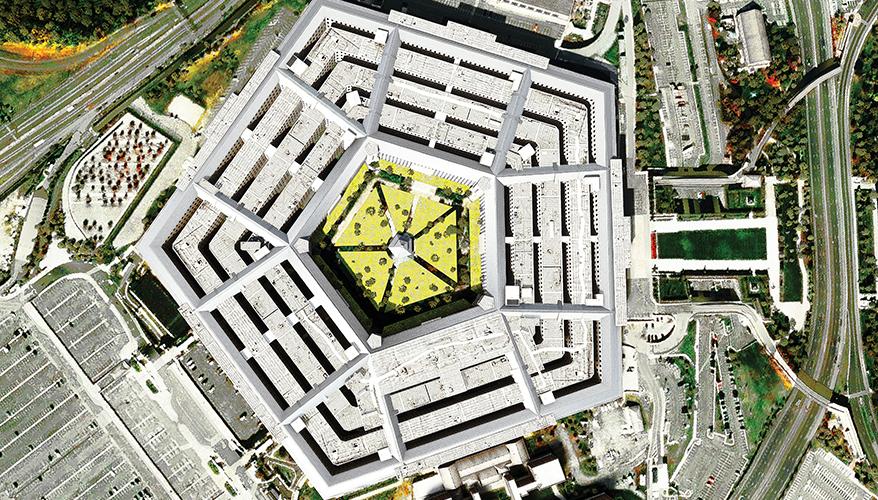
When the Golden Dome initiative was announced. A layered, space-based missile defense architecture with an official price tag of $175 billion and a stated timeline of three years. The immediate business conversation defaulted to where it always does: which primes and platforms will capture the contracts. SpaceX, Palantir, Lockheed Martin, Anduril. The obvious names.
That conversation is both correct and, for most boards I work with, largely irrelevant. The more pressing strategic question is not who captures the upside (It is which companies, publicly listed and privately held alike) will find their balance sheets, talent strategies, supply chains, and regulatory positioning fundamentally repriced by the time the smoke clears, whether or not they ever submit a proposal to the Pentagon.
In the work I do with boards and management teams navigating uncertainty at scale, the pattern I see most often is not recklessness. It is a miscalibrated sense of timing. Leaders understand that the world is changing. What they consistently underestimate is how quickly the strategic window for repositioning closes.
"The assumption that we have time to monitor this and respond later is itself the strategic error. The companies that will define the next competitive landscape are making those moves right now."
Historically, defense-driven industrial cycles have unfolded over 10 to 15 years. Boards learned to treat them as long-lead events, observe, assess, then act. That model is obsolete. Palantir's Forward Deployed Engineers are already embedded in Department of Defense operations, configuring decision-making infrastructure in real time. Rheinmetall, which one year ago was an automotive parts manufacturer, has converted two German factories to produce weapons and ammunition and is now actively evaluating acquiring idle Volkswagen plants to expand military production. Its stock has outperformed the DAX by roughly 180% and its market capitalization now exceeds Volkswagen's.
The geopolitical environment that made the Golden Dome inevitable is the same environment reshaping every supply chain, labor market, energy grid, and regulatory regime your company operates in. The Dome is a symptom of a deeper structural shift, and boards that are waiting for more certainty before acting are, in practical terms, already late.
Golden Dome cost estimates, range of projections
The spread between the lowest and highest estimates is itself a boardroom data point. When the range spans $175B to $3.6T, the strategic signal is not in the number. It is in the commitment.
Three convergences that no board has fully priced in

Defense spending creates a structural wage floor that civilian companies cannot match. The bottleneck isn't wages, it's clearances.
Defense spending at this scale creates a structural wage floor in engineering, data science, advanced manufacturing, and cyber that civilian companies increasingly cannot match (Security-cleared software engineers command $135,000–$160,000 annually, and there are only approximately 2 million active clearance holders) less than 0.6% of the population.
The bottleneck is not simply wages. It is credentials. Unlike other talent markets where companies can compete through compensation, the cleared defense workforce faces a federal government–controlled access point. Firms that begin sponsoring clearances now will have structural advantages that money alone cannot replicate in 2027.
McKinsey's analysis found that talent shortfalls from this kind of sectoral competition cost a median-sized company over $300 million annually in productivity losses alone. That is a financial risk number, and it belongs in your board's risk register.
The ecosystem for dual-use innovation is forming now. Companies not already oriented toward defense adjacency are running out of time.
The SHIELD contract vehicle, through which the Pentagon has pre-qualified over 2,100 companies for a $151 billion pool, is already in motion. Companies not on that list are missing the institutional relationships, compliance architecture, and security frameworks that will define the next decade of advanced industrial competition.
For PE-backed companies, this creates particular exposure. Private equity–owned businesses generally lack the compliance infrastructure, CMMC certification, export control frameworks, classified information handling, required to compete for or supply into defense programs. A PE-backed company operating on a three-to-five year exit horizon has to make a deliberate decision about whether the investment is compatible with the fund's return expectations. That is a conversation that needs to happen at the board level.
CMMC, export controls, and national security sourcing mandates are expanding well beyond declared defense contractors.
The Cybersecurity Maturity Model Certification, export control mandates, national security sourcing requirements, and dual-use technology restrictions are expanding, and they will expand further as national security infrastructure deepens its integration with commercial technology.
The boards I work with that handle this well treat regulatory creep not as a legal department question but as a strategic one: where are we embedded in supply chains that will come under national security scrutiny, and what would it cost us to either comply or exit?
The gap between the number of roles requiring clearance, up nearly 1,000% since 2014, and the growth in qualified candidates, less than 10%, is the structural consequence of a regulatory framework that expanded faster than the workforce could adapt. Civilian companies are about to encounter the same dynamic.
Which industries are most at risk, and from what
This is not a ranking of industries positioned to win defense contracts. It is an assessment of where I see boards underestimating the second and third-order consequences of the Golden Dome and broader defense spending realignment.
| Sector | Primary Exposure | Board-Level Risk | Level |
|---|---|---|---|
| Advanced Manufacturing | Direct supply chain pull; materials, precision components, specialty metals | Capacity and pricing disruption; civilian customers de-prioritized | Critical |
| Technology & Software | Talent drain to defense-adjacent AI, cyber, and systems roles; dual-use IP scrutiny | Compensation architecture repriced; export control risk on commercial platforms | Critical |
| Energy & Utilities | Demand spike at installation sites; grid infrastructure; critical infrastructure designation | Capex allocation conflicts between commercial and defense-driven capacity build | High |
| Logistics & Transportation | Supply chain restructuring around domestic sourcing mandates; near-shoring pressures | Route dependencies repriced; CMMC requirements for carriers | High |
| Healthcare & Life Sciences | Competition for biomedical engineers, data scientists, and AI talent | Talent cost inflation; dual-use research scrutiny | High |
| Construction & Real Estate | Demand surge for specialized facilities: hardened structures, data centers | Labor and materials cost inflation in defense-adjacent markets | High |
| Financial Services & PE | Portfolio company exposure; CFIUS scrutiny on transactions | Due diligence must evolve; exit multiples recalibrated by compliance gaps | High |
| Consumer & Retail | Supply chain cost inflation from critical minerals reallocation; operations talent pressure | Indirect exposure underestimated; supplier relationships affected by national security sourcing | Medium |
Private equity–owned companies across these sectors carry a specific structural disadvantage: they are embedded in affected supply chains, but their compliance architecture is typically underdeveloped relative to publicly traded peers (on current data) this gap is real but not insurmountable within a 12–18 month repositioning window. The question for PE sponsors is whether that investment is compatible with their hold period and return expectations.
Why the cycle has compressed
The historical precedent for defense-driven industrial transformation (the Apollo era, the Cold War build-up, the post-9/11 homeland security expansion) suggests a 10-to-15-year cycle from government commitment to broad commercial impact. That model is broken. Three structural forces have compressed the timeline.
First, the technology layer has changed. Palantir's Forward Deployed Engineer model means that the translation from policy commitment to operational deployment is measured in quarters, not years. The AI and data infrastructure being built for Golden Dome is not a 2030 project. Parts of it are in production today.
Second, the industrial base is already pivoting. Rheinmetall's conversion of automotive factories to weapons production, Continental's partnership with Rheinmetall to retrain laid-off workers for defense manufacturing, and Volkswagen's exploration of defense production. These are Q1 2025 decisions made by boards that read the geopolitical environment and acted on it.
Third, the procurement architecture is already in place. The SHIELD contract vehicle. A $151 billion, 10-year IDIQ mechanism, has pre-qualified over 2,100 companies. The Pentagon is building the industrial base and the innovation pipeline simultaneously.
The question your CEO and CFO need to be asking is not "what is our Golden Dome strategy?" It is: which of our current capital allocation decisions, facilities, workforce, technology, supplier relationships, will look strategically naive in 2027 if we have not accounted for this structural shift?
Board members should be asking management whether the risk register, the talent strategy, and the capital plan have been stress-tested against a scenario in which the defense-industrial realignment moves faster than current projections. The asymmetry matters: the cost of preparing for a rapid transition and being wrong is modest. The cost of failing to prepare and being right is existential for some sectors.
The questions I cannot answer, and neither can anyone else right now
The work I find most valuable with boards is not delivering conclusions. It is surfacing the questions that are genuinely unresolved. The ones where the standard analytical frameworks give confident-sounding answers that may be deeply wrong.
-
C-SuiteBoard
The Apollo-era spinoff story is frequently cited as evidence that defense investment creates broad commercial opportunity. But the IP generated by Golden Dome–related innovation will be deeply entangled with security clearance requirements, export control classifications, and classified program structures. Mid-market companies and PE-backed platforms (Without established government relations or cleared workforces) may find themselves permanently downstream of the value creation.
-
C-Suite
Defense sector attrition held at nearly 15% in 2024, more than double the average across other US industries. Roughly a third of aerospace and defense manufacturing and engineering roles are held by workers 55 or older. The wage and career trajectory advantages of defense-adjacent roles may become self-reinforcing, permanently shifting the talent equilibrium away from civilian sectors in ways that cannot be reversed through compensation alone.
-
Board
Space-based interceptors do not yet exist at operational scale. The CBO estimates costs between $161B and $542B for interceptors alone. Bloomberg puts the full system closer to $1.1T. The AEI's high scenario reaches $3.6T over 20 years (But the capital allocation, workforce restructuring, supply chain realignment, and regulatory architecture being built around this program are real) regardless of whether the full Golden Dome is ever deployed. Waiting for technical certainty before making strategic decisions is itself a decision, and historically, it is the wrong one.
-
C-SuiteBoard
Companies with significant operations in China, the EU, or non-aligned markets face second-order risks not being adequately modeled: regulatory retaliation, customer and partner relationship strain, potential classification of commercial technology as dual-use, and the reputational complexity of being perceived as embedded in US defense policy. The boards that handle them well have mapped their exposure explicitly and made deliberate decisions about where to draw lines.
Is the primary obligation of a large global company to optimize its position within a defense-driven industrial cycle, or is it to actively advocate for the conditions that make global commerce, open supply chains, and cross-border talent possible in the first place?
Preparing for a defense-driven world is a legitimate strategic imperative. But companies whose entire business model depends on a stable, interconnected, open global economy may have a shareholder obligation, not just a reputational one. To be advocates for the conditions that make that economy function. Batteries, not just bullets.
What boards can do in the next 90 days
These are the specific conversations I am facilitating with companies right now.
For C-suite executives
Map your company's embedded exposure across three dimensions: talent (where are your roles competing with defense-adjacent compensation?), supply chain (which suppliers are in the SHIELD pre-qualified pool, and what does that mean for their civilian capacity?), and regulatory (which commercial technology assets could be reclassified under expanding dual-use frameworks?). Do not rely on your legal department to drive this analysis. It is a strategy question.
For board members
Ask management to present a scenario analysis that models the second-order consequences on your cost structure, talent pipeline, and regulatory posture over a three-to-five year horizon. If management's answer is that this is primarily a defense sector issue with limited relevance, probe that assumption with the sectoral analysis above.
And ask one more question, quietly and seriously: Is our board constituted to even understand what is being decided here? The intersection of national security policy, advanced technology, global supply chain strategy, and labor market economics is not a natural fit for boards assembled primarily for financial oversight. That is not a criticism. It is an observation about the governance gap this moment is exposing.
CEO & Founder, Telesto. Alex advises corporate boards, management teams, and private equity sponsors on geopolitical risk, operational resilience, and sustainability strategy across the US and globally. She is the author of The Courage to Continue: Stay the Course on Sustainability to Secure Our Future and serves on the board of the Chicago Council on Global Affairs.
For advisory engagement or speaking inquiries, visit alex-kruzel.com or telestostrategy.com.
Sources: Congressional Budget Office, Bloomberg, American Enterprise Institute, Department of Defense, McKinsey, Rheinmetall, Fortune, Aerospace Industries Association. All data points cited from publicly available industry research and regulatory disclosures.